The EURING brochure, Bird Ringing for Science and Conservation, describing the value of bird ringing and the activities of EURING, is available in several languages.
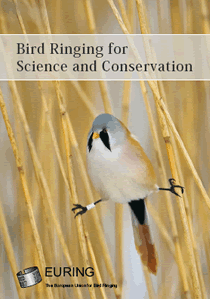 Download a copy using the links below.
 English Bird Ringing for Science and Conservation (< 2 MB)
 Italiano L’inanellamento per la scienza e la conservazione (< 2 MB)
 Deutsch Vogelberingung für Wissenschaft und Naturschutz (< 2 MB)
 Hrvatska Prstenovanje ptica u znanosti i zaštiti prirode (< 2 MB)
 Francais Le baguage ornithologique pour la science et la conservation (<4 MB)
 Srpski Prstenovanje ptica u naučne scrhe i njihova zaštita (< 25 MB)
 Slovenščina Obročkanje ptic v raziskovalne namene in za varstvo narave (< 3 MB)
These files need a PDF Reader, for example Acrobat 
Last updated: